
WHERE DID KHARMS DISAPPEAR
drama
Mila Mašović Nikolić
This production is a deep cry for freedom, both social and personal. It speaks about the rise and fall of a free man who, in his own unique way, fights for freedom under a dictatorship, within a rotten, insidious and hypocritical society. It is clear that a free man is the greatest and most dangerous enemy of those in power, especially of a regime that rules through authoritarianism. And in all those great dictatorships, there is no room for the absurd and the meaningless.
We are living Kharms today. If we simply change our perspective, we will clearly see that everything around us is terribly absurd and realize that this is our reality. Working on Kharms is both a pleasure and a challenge. His personal life and his work constitute a vast, unique and extraordinary world, distant from us and yet, at the same time, remarkably close. His world is also our world; his struggle is also our struggle; in some way, we are all Kharms. In a life within such a dirty world, where all norms have been distorted, where everything has been displaced, where everything loses its meaning, where everything is masked and concealed, where freedom disappears while everyone slowly comes to accept it, theatre must not remain indifferent. It must ask great questions, fight, observe all social anomalies and comment on them, but at the same time it must also offer hope that perhaps things can be different—which is, ultimately, its essential purpose.
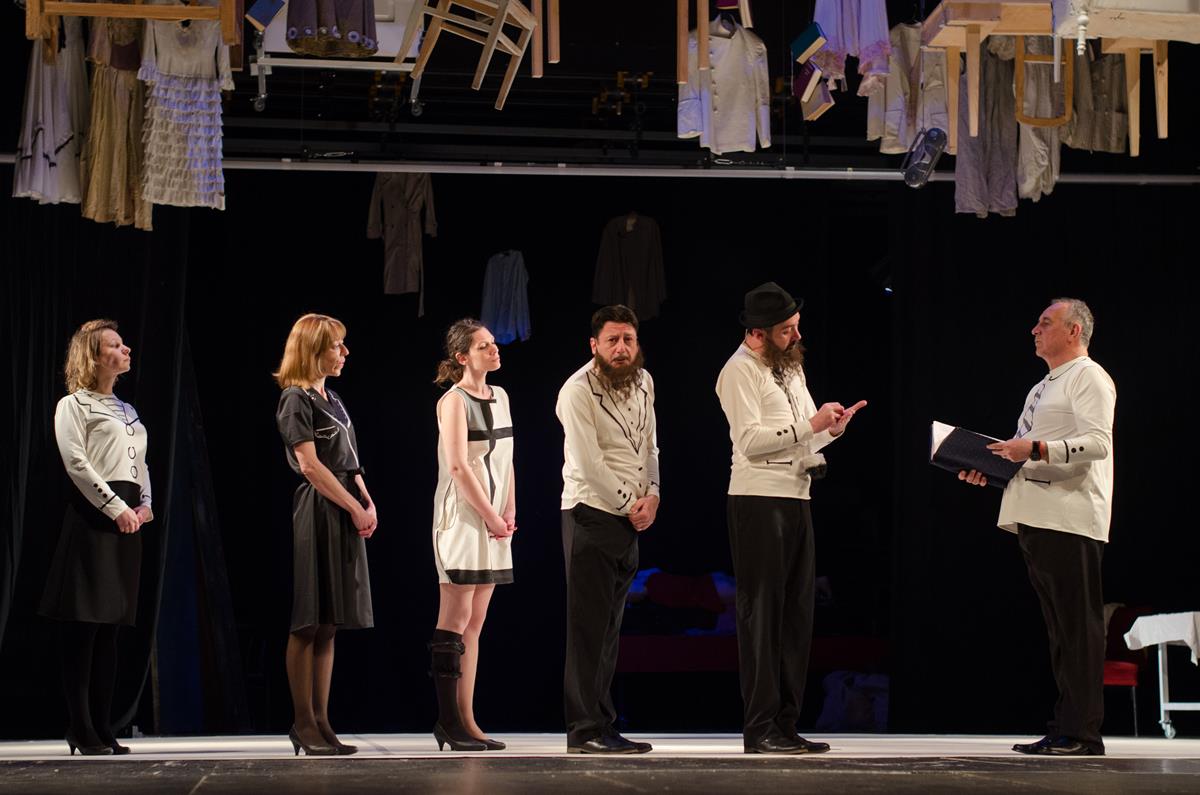
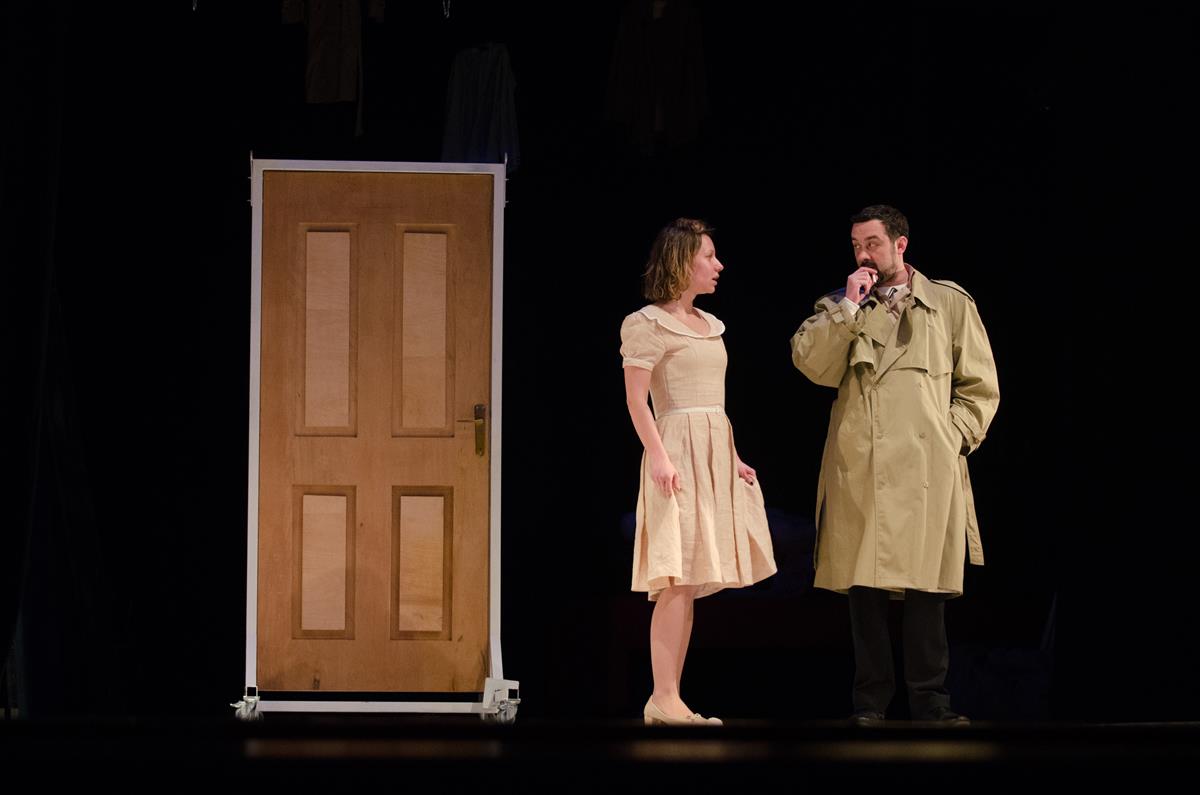
The world we have created in this production is made precisely through the blending of reality and meaninglessness, life and magic. Our world has no boundaries. Through it, we make powerful comments and ask great questions in our own way, which we believe to be both interesting and direct. Our production does not offer answers; it only asks questions. It delves into every aspect of life, opens up particular stories, and speaks about everything that surrounds us. The escape into comedy is merely a way of concealing a profound tragedy.
Kharms opens up an immense space in which everyone can find their own way to speak about their own pain, about what is missing, about what is both dream and life, about their own world, and to tell some of their own deeply honest stories. Through Kharms, I have tried to speak about the fragmented and absurd society in which we live, about the mentality of the petty bourgeoisie, the denial of freedom, political and state repression, and humiliation.
This production is my deep and personal cry, our shared cry…
ABOUT THE AUTHOR
Mila Mašović was born in 1983 in Niš. She writes plays for children and adults. In 2010, she graduated from the Faculty of Dramatic Arts in Belgrade, Department of Dramaturgy, and in 2007 from the Faculty of Philology in Belgrade, Department of General Literature and Literary Theory. At the Institute for Theatre, Television, Media and Film in Belgrade, she conducts academic research in the theory of dramatic arts, media and culture as a doctoral student and scholarship recipient of the Ministry of Education, Science and Technological Development of the Republic of Serbia.
She has received numerous literary awards, including the Branko Award, the Selenić Award and the Kulundžić Award, as well as the award for Best Original Text for Children at the “Zvezdarište” Festival in Belgrade and the Children’s Jury Award in Kotor in 2008. She has written numerous dramatizations for radio and theatre.
She is the author of several original radio plays, the most notable of which are: Faster Than a Bullet – The First Serbian Marathon Runner, Radio Belgrade, 2009; and One – A Woman’s Drama, Radio Belgrade, 2010.
Premieres of her plays for children include: The Angry Worm, “Pužić” Little Theatre, Belgrade, 2008; Gulliver’s Journey, “Pinocchio” Puppet Theatre, Zemun, 2009; and The Stone Flower, “Duško Radović” Little Theatre, Belgrade, 2015.
Premiere of her play for the evening stage: Hormones, City Theatre “KIC – Budo Tomović”, Podgorica, 2014.
She lives and works in Belgrade.
DIRECTOR’S BIOGRAPHY
Angelčo Ilievski is a young Macedonian director who graduated in Theatre Directing from the Faculty of Dramatic Arts in Skopje, Republic of Macedonia, in the class of Professor Slobodan Unkovski and Associate Professor Zlatko Slavenski. His home theatre, where he works as a director, is the National Theatre in Bitola.
His directing credits to date include: The Sower of Children (based on his own text), The Lesson by Eugène Ionesco, The Seducer (his own text), Steps by Samuel Beckett, The Ghost Sonata by August Strindberg, The Censor by Anthony Neilson, Family Stories by Biljana Srbljanović (all productions staged in Macedonia), and Mom, Who Started It First? by Dejan Dukovski in Osijek, Croatia.
He was assistant director on The Lost Germans by Dejan Dukovski, directed by Slobodan Unkovski, and The Master and Margarita by Mikhail Bulgakov, directed by Ivan Popovski.
He is the author of three plays: The Sower of Children, The Seducer and Where Is Your Place, Joey? (a play for children), as well as two books of poetry, On the Road to the Sun and Memories.
He has participated in numerous workshops in Macedonia and abroad. His production The Sower of Children won the Grand Prix for Best Production at two festivals, while Ilievski received an award for Best Director. At several festivals in Macedonia and abroad, actors from his productions have also received awards and recognitions.
ABOUT THE PLAY
This text, originally titled Citizen Kharms, is a form of documentary fiction about the Russian avant-garde writer Daniil Kharms. Unlike the famous film from the 1980s, this production is a combination of fiction and facts. I wrote the text based on various sources, historical materials, Kharms’ diary and notebooks, police files, testimonies of people who knew him, as well as his literary works—short stories, plays and poems.
What interested me was to explore through this play how and to what extent totalitarianism develops in a bureaucratically organized country such as Soviet Russia. The absurdity of Kharms’ suffering should serve as a warning to all of us. What affected me particularly deeply was the fact that Kharms became a “police case” because of the literature he wrote for children. The story of Kharms is a story of injustice and the persecution of artists; in this sense, it is universal and deserves to be told.
Mila Mašović Nikolić, playwright


When is this performance playing?
You can find all upcoming dates on the Repertoire page.
BASIC INFORMATION
Genre
Drama
Age
14+
Premiere
May 6, 2015
Stage
Main Stage
CREATIVE TEAM
Text
Mila Mašović Nikolić
Director
Angelčo Ilievski
Set Designer
Veljko Stojanović
Costume Designer
Ivana Mladenović
Music
Darija Andovska
Language Editor
Nataša Ilić
Photography
Vladimir Vanja Stojanović
Lighting Design
Dragoslav Dobrosavljević
Repetiteur
Ivana Mirović
CHARACTERS
Daniil Ivanovich Yuvachov Kharms
Dušan Matejić
Kharms’ Mother; Marina, Kharms’ Wife
Evgenija Stanković
Kharms’ Father; Psychiatrist
Risto Bukvić
Yelizaveta, Kharms’ Sister
Maja Banković
Claudia, Kharms’ Lover (Actress)
Katarina Mitić / Jelisaveta Karadžić
Inspector 1, Junior
Marjan Todorović
Inspector 2, Senior
Aleksandar Mihailović
Knight
Dragoslav Savić
Child
Luka Grubišić
TECHNICAL TEAM
Head of Technical Department
Zoran Ilić
Technical Coordinator
Ljubiša Živković
Stage Manager
Slobodan Ilić
Prompter
Aleksandra Vukov
Sound Engineer
Vladimir Đorđević
Lighting
Dragoslav Dobrosavljević
Stage Technician
Slaviša Filipović
Set Decorators
Dragan Dinić, Srđan Kitanović, Radovan Živković, Miodrag Đorđević, Marin Rajić, Mića Lazarević, Rade Pešić
Props Managers
Dragan Nikolić, Marko Đorđević
Wardrobe
Dušica Mladenović, Marko Dinić
Makeup and Wig Artists
Ljiljana Rašić, Marija Pešić, Ivana Lazarević
Tailoring
Vladimir Pekić, Marina Stevanović, Snežana Aranđelović
Carpentry and Metalwork
Bogoljub Đorđević, Branislav Nikolić, Goran Stanković, Dragan Perić
Procurement
Dobrila Marjanović, Zoran Denčić