
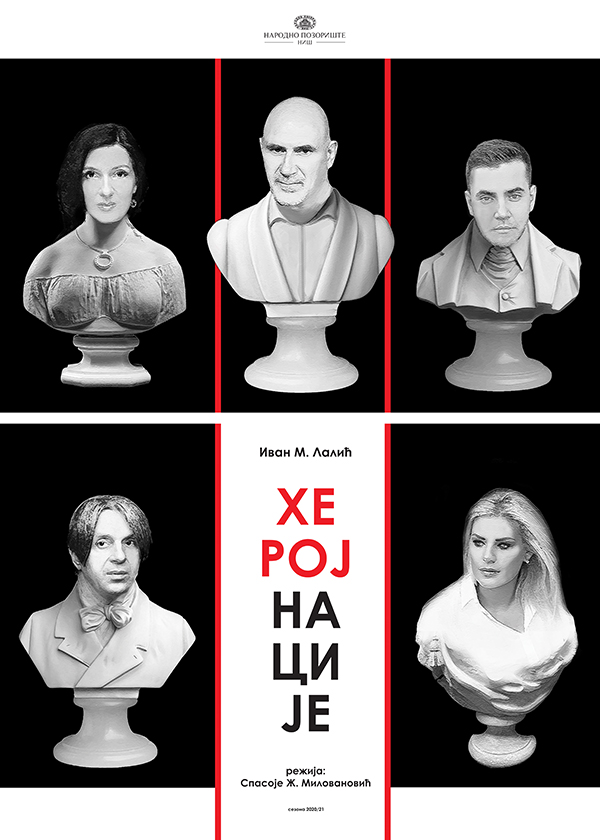
HERO OF THE NATION
drama
Ivan M. Lalić
THE PERFORMANCE IS DEDICATED TO THE ACTOR
DRAGOSLAV SAVIĆ SAFI
(1960–2021)
ABOUT THE PLAYWRIGHT
IVAN M. LALIĆ
He was born in Belgrade in 1965.
He graduated in Dramaturgy from the Faculty of Dramatic Arts in Belgrade.
He is the author of numerous plays, including A Puritan Comedy at the National Theatre in Belgrade; In the Heat of Passion, My Father Fighting the Scoundrels from Outer Space, and Love in Savamala at Zvezdara Theatre; Slave of Love and Cuba Libre at the Serbian National Theatre in Novi Sad; as well as Hero of the Nation at the “Toša Jovanović” National Theatre in Zrenjanin.
The productions In the Heat of Passion and Hero of the Nation have been performed at more than 50 venues in Serbia and abroad.
He is the recipient of the “Branislav Nušić” Award for Best Comedy for In the Heat of Passion, as well as the “Golden Ćuran” Award for the plays Hero of the Nation and Love in Savamala.
He is the co-author of the television series The Open Door, produced by Monte Royal Pictures, and the author of the children’s television series Pilot in the Grass, produced by Radio Television of Serbia (RTS).
DIRECTOR’S BIOGRAPHY
SPASOJE Ž. MILOVANOVIĆ
He was born in Kruševac in 1971.
He graduated and earned a master’s degree in Dramaturgy from the Faculty of Dramatic Arts in Belgrade, where he also defended his doctoral dissertation.
He works in theatre as a playwright, dramaturg, theatre critic, and theatrologist.
He served as Director of Drama at the National Theatre in Belgrade. He also worked as a dramaturg at the Kruševac Theatre and as Editor-in-Chief and Managing Editor of the Cultural and Educational Community of Kruševac (KPZ Kruševac).
He is currently the Director of the National Theatre in Niš.
THE DIRECTOR’S READING OF HERO OF THE NATION
Spasoje Ž. Milovanović
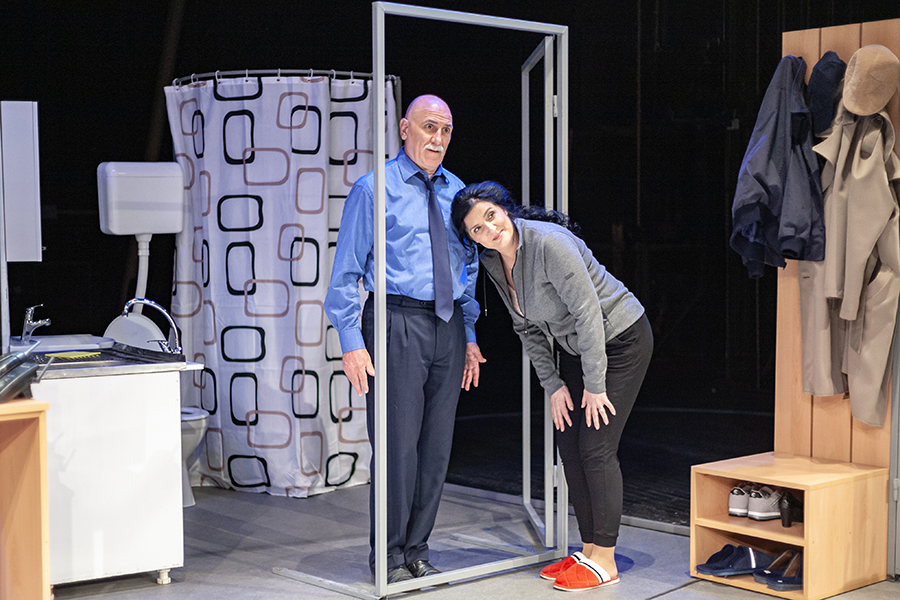
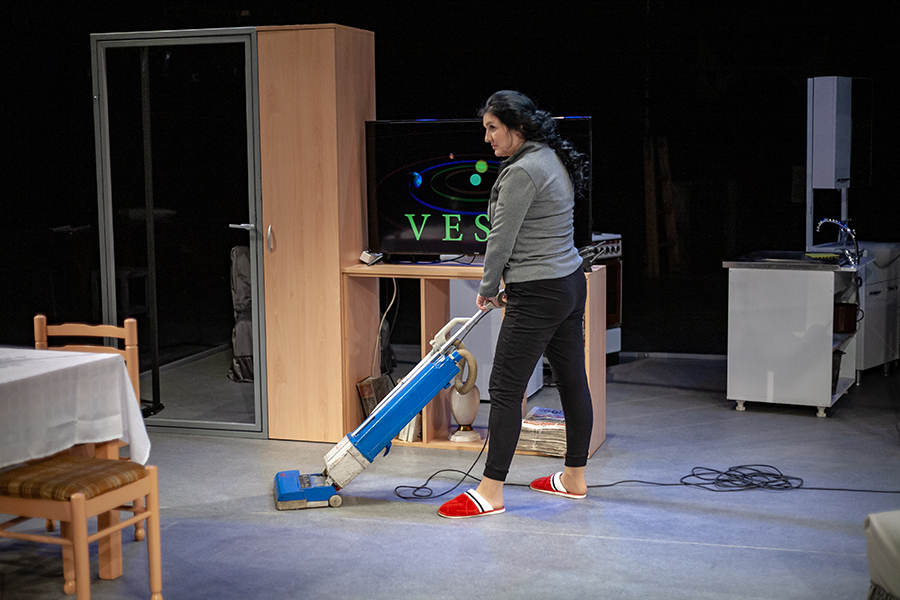
Hero of the Nation explores the degradation of the family, or rather its opening up to the widest possible public, ultimately leading to the disorientation of the individual. On the one hand, the play attempts, if not to penetrate, then at least to point to the consequences of experimenting with the fragility of the human psyche, the desire for instant fame, and the privileges that such fame brings—privileges that, as a rule, emerge from the metastasizing chaos and violence within society.
On the other hand, while examining the media’s aspiration to be equal to reality, to replace it, and even to become more real than reality itself, the play also points to the possibilities of theatre in creating a new reality—one that draws the audience in and lays it bare through its curiosity to abolish the boundary between the public and the private.
Our production insists precisely on the spectator. It does not depict a reality of deceptive reflections, nor does it offer any reflections; rather, starting from its own materiality and that of social reality, it enables them to be perceived within the same movement. Thus, by questioning the function of theatre, it raises the question:
Is it wise what the audience has said?
When is this performance playing?
You can find all upcoming dates on the Repertoire page.
BASIC INFORMATION
Genre
Drama
Age
14+
Premiere
May 13, 2021
Stage
Main Stage
CREATIVE TEAM
Playwright
Ivan M. Lalić
Director
Spasoje Ž. Milovanović
Set and Costume Designer
Milica Bajić Đurov
Composer
Katarina Šandorov
Assistant Set and Costume Designer
Katarina Pavlović
Language Consultant
Nataša Ilić
Production Coordinator
Snežana Jović
Photography
Nikola Stojanović
CAST
Budimir Životić
Dragan Boža Marjanović, guest artist
Desanka
Snežana Petrović
Ljupe
Uroš Milojević, guest artist
Female Journalist
Jovana Golubović, guest artist
Undertaker
Dragiša Veljković
TV Report
Tamara Tasić (Južne vesti), Ana Milenković (Belami), Jadranka Tasić (NTV), Milica Vukić (Kopernikus) and Dragan Stojanović (TV Zona)
Media & Reform Centre – Videographer and Editor
Bojan Ranđelović
Contra Dance Studio – Choreographer
Danica Ničić
Contra Dance Studio – Dancers
Anja Tonsа Milovanović, Atina Vasović, Anđelija Ćulibrk, Jana Milenković, Jana Radojčić, Katarina Lakić, Anastasija Rančić, Jelena Živković, Miona Macić
Funeral Home Attendant
Marko Đorđević/Dragan Nikolić
Cameraman/Aleksa Simonović
Slaviša Filipović
Bus Passengers
Miodrag Đorđević, Snežana Jović, Katarina Pavlović, Ivana Stojanović, Aleksandar Marinković, Nelica Stankov, David Jovanović, Dušica Mladenović, Bogoljub Đorđević, Srđan Kitanović, Lidija Milosavljević, Pavle Rajić, Marin Rajić, Stanislava Petrović, Tamara Milosavljević and Dragana Petrović
TECHNICAL TEAM
Stage Manager
Slobodan Ilić
Sound Design
Dobrila Marjanović
Lighting Design
David Jovanović
Prompt
Tamara Milosavljević
Technical Director
Dejan Mitić
Stage Manager
Slaviša Filipović
Set Crew
Srđan Kitanović, Miodrag Đorđević, Mića Lazarević, Rade Pešić
Props Master
Marko Đorđević
Wardrobe
Dušica Mladenović, Marko Dinić
Make-up and Wig Artists
Ljiljana Rašić, Marija Cvetanović, Ivana Lazarević
Tailoring
Marina Stevanović, Vladimir Pekić
Workshop
Bogoljub Đorđević, Goran Stanković, Branislav Nikolić, Dragan Perić
Procurement
Zoran Denčić
Driver
Nebojša Šarčević