
AS YOU LIKE IT
drama
William Shakespeare
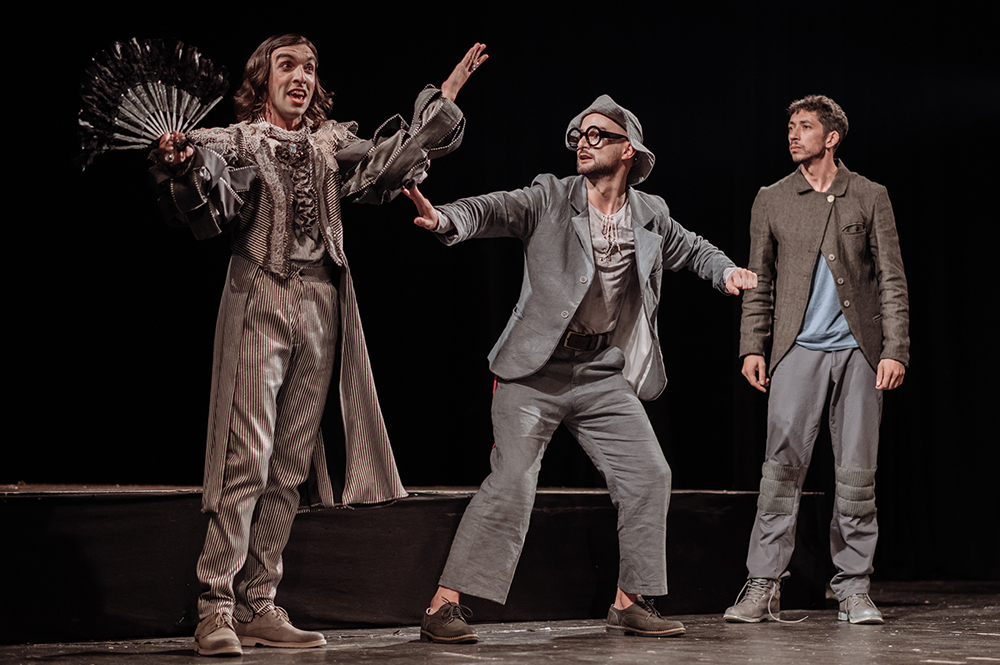
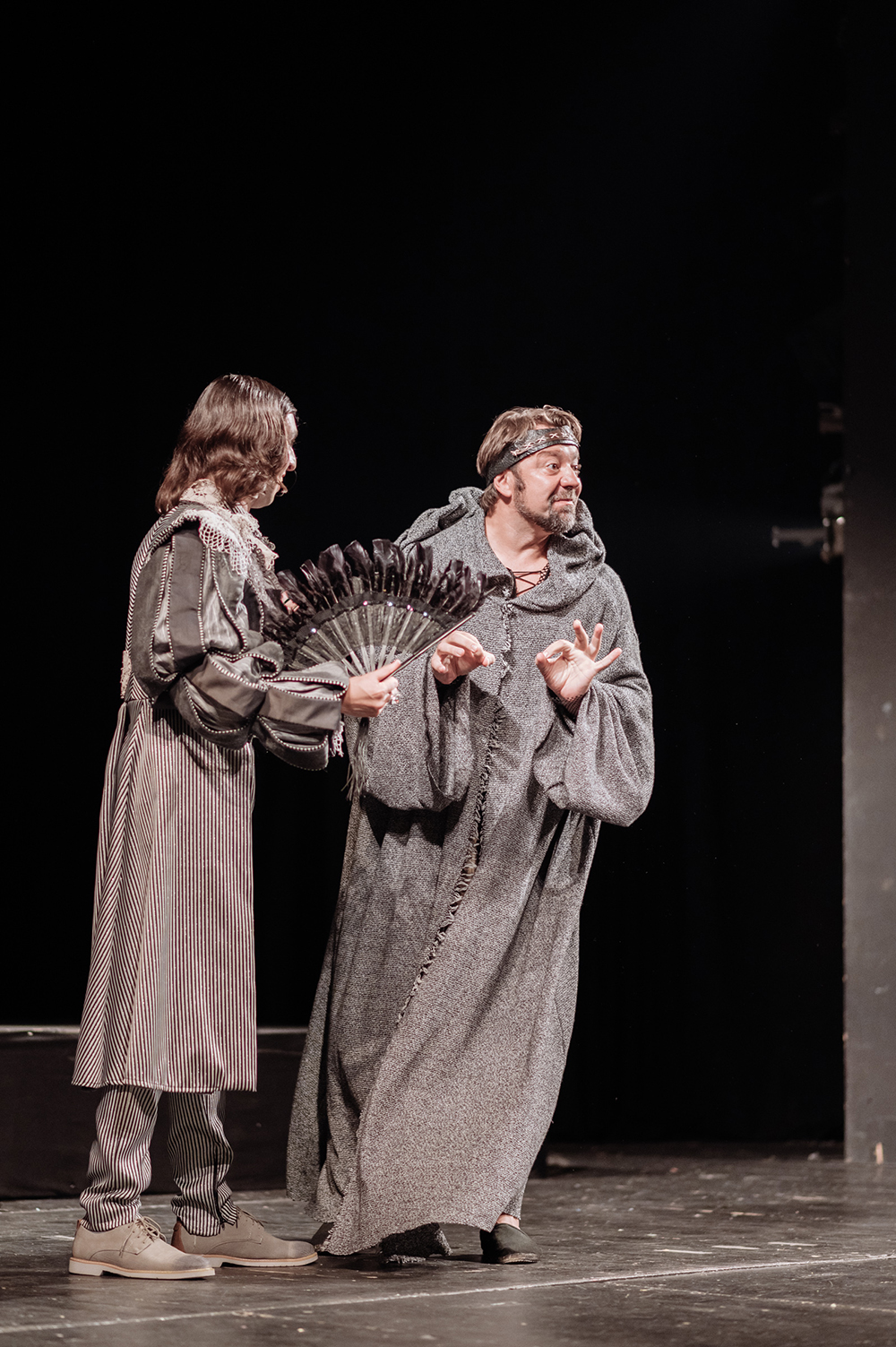
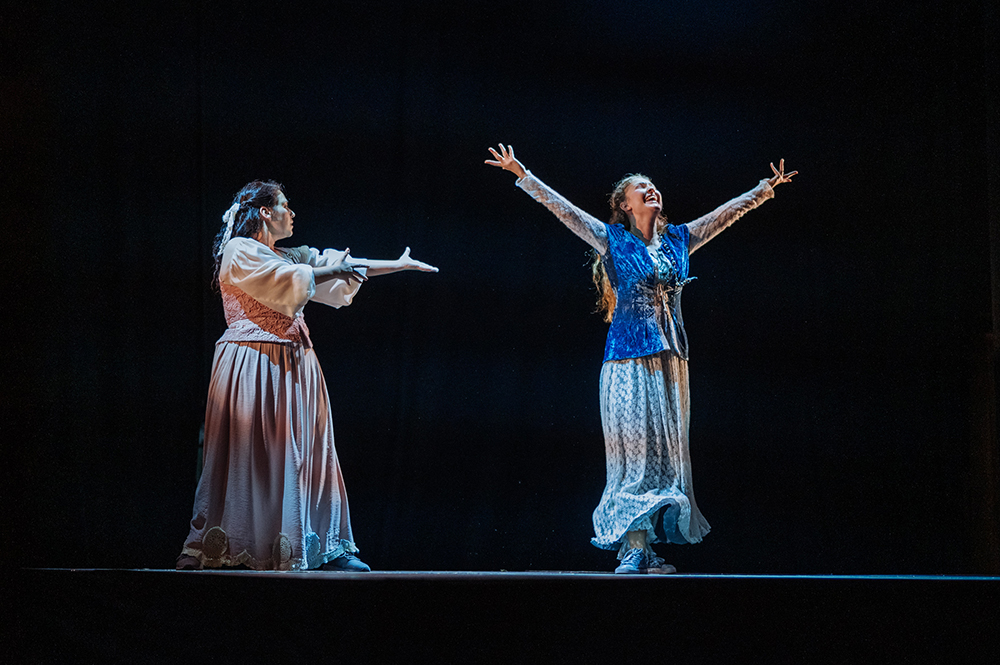
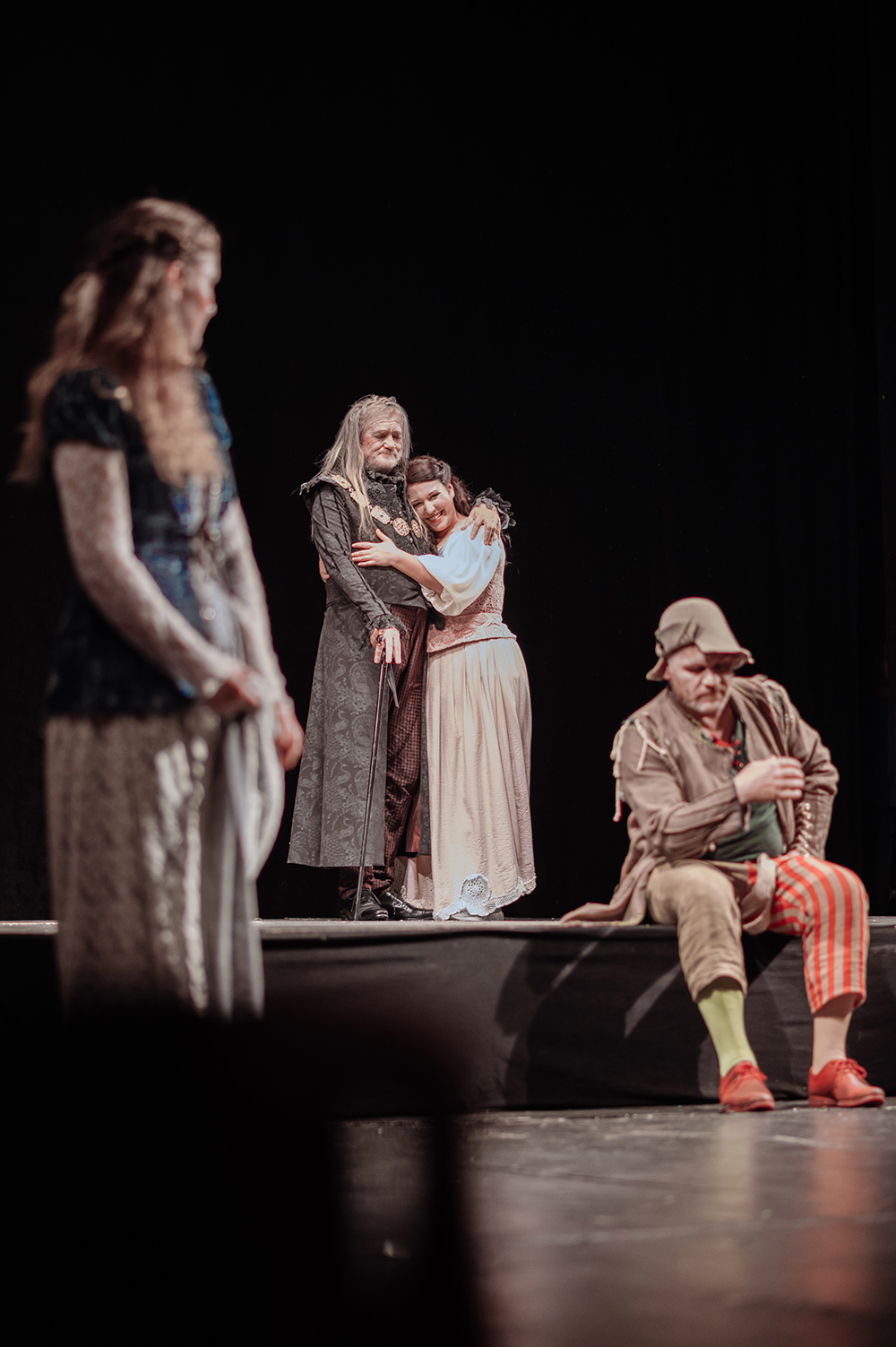
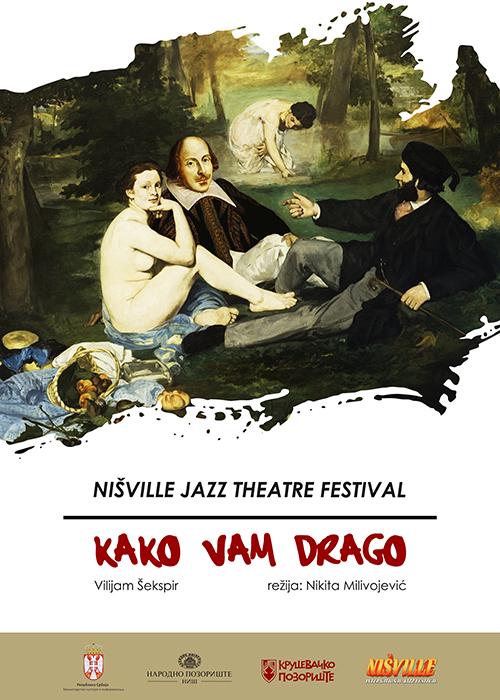
In cooperation with the National Theater in Niš, Kruševac Theater and the International Nišville Jazz Theater Festival, the play “As You Like It” was produced, whose premiere performance was held on August 2, 2019, at Nišville.
This romantic pastoral comedy, written around 1600, follows the fate of two young people in love who are banished from their homes. Orlando is sent away by his older brother, while Rosalind is banished by her uncle, who has taken over her father’s court. Unaware of each other’s whereabouts, they both seek refuge in the Forest of Arden, where Rosalind’s banished father has already found shelter. Rosalind disguises herself as a young man named Ganymede, which leads to a series of comic situations. In the end, everything concludes with a general reconciliation and the weddings of four couples.
Through the story of the conflict between estranged brothers, Shakespeare promotes human values such as brotherly love, tolerance and togetherness, showing how every problem can be overcome and negative characters transformed into good ones by the most magnificent of all spells – sincere love.
ABOUT THE AUTHOR
William Shakespeare (1564–1616), an English poet, playwright and actor, is regarded as the world’s greatest English-language writer.
The body of Shakespeare’s surviving work consists of 38 plays, 154 sonnets, two long narrative poems and several other poems. His plays have been translated into all major living languages and are performed throughout the world more frequently than those of any other playwright.
Between 1585 and 1592, he began a successful career in London as an actor, writer and co-owner of the theater company “The Lord Chamberlain’s Men,” later known as “The King’s Men.” In 1599, several actors from the company founded their own theater on the south bank of the Thames and called it the Globe.
Shakespeare wrote most of his works between 1590 and 1613. His early works were mostly comedies and histories, genres he brought to a high level of perfection by the end of the 16th century. He then wrote tragedies until around 1608. During this period, Hamlet, King Lear and Macbeth were created, plays considered among the greatest works of world theater. In his later period, he wrote tragicomedies and collaborated with other playwrights.
Shakespeare was a highly respected poet and playwright during his lifetime, but his reputation did not reach its present scale until the 19th century. The Romantics particularly emphasized his genius, while the Victorians celebrated him almost as an idol. Since the 20th century, Shakespeare’s timeless and ever-relevant works have been continuously performed in various cultural and political contexts around the world.
All of Shakespeare’s works have been translated into Serbian.
Tragedies: Romeo and Juliet (1593), Titus Andronicus (1594), Julius Caesar (1599), Troilus and Cressida (1601–1602), Hamlet (1602), Othello (1604), King Lear (1605), Macbeth (1606), Antony and Cleopatra (1607), Coriolanus (1608), Timon of Athens (1608).
Comedies: Love’s Labour’s Lost (1590), The Two Gentlemen of Verona (1591), The Comedy of Errors (1593–1594), A Midsummer Night’s Dream (1594), The Merchant of Venice (1595), The Taming of the Shrew (1596), Much Ado About Nothing (1599), The Merry Wives of Windsor (1599), Twelfth Night (1599–1600), As You Like It (1600), All’s Well That Ends Well (1602–1604), Measure for Measure (1604), Pericles (1608), Cymbeline (1610), The Winter’s Tale (1610), The Tempest (1611).
Historical dramas: King Henry VI (1591), King Richard III (1593), King Richard II (1594), King John (1594), King Henry IV (1596–1597), King Henry V (1599), King Henry VIII (1612).
Poems: Sonnets (written between 1595 and 1599, published in 1609), Venus and Adonis (1593), The Rape of Lucrece (1594), The Passionate Pilgrim.
DIRECTOR’S BIOGRAPHY
Nikita Milivojević is one of Serbia’s leading theater directors.
“With his productions, he marked the nineties in Serbian theater, and with bold and new readings of the classics, he brought it into the new century.”
He has received all the major theater directing awards in his country, including the Bojan Stupica Award, several Sterija Awards, Bitef Awards, critics’ awards from Scena magazine, as well as annual awards from the National Theater in Belgrade, the Yugoslav Drama Theatre, Budva City Theater, Duško Radović Theater, Šabac Theater “Ljubisa Jovanović,” SNP Novi Sad, and many others at festivals throughout Serbia, including Kragujevac, Jagodina, Vršac, Šabac, Zemun, Novi Sad and Mladenovac.
In a joint survey of theater critics, the production of “Banović Strahinja,” directed by Nikita Milivojević, was proclaimed the most significant production of the 1990s in Serbian theater.
Based on the book “New York – Belgrade” by D. Miklje, he wrote the screenplay for and directed the feature film “Jelena, Katarina, Marija” (New York, 2008–2009).
Since 1997, he has also pursued a career in Greece. His production of “Crime and Punishment” at the Amore Theater was proclaimed the cultural event of the year in Athens, while for “Three Sisters” at the Katja Dandulaki Theater he received the Best Director Award.
He has directed productions for the Athens Summer Festival, as well as in Delphi and Epidaurus.
In addition to Greece, he has directed in Sweden, Slovenia, Macedonia, Turkey, Germany, Italy, Cyprus, the United Kingdom and the United States.
He has directed works by Calderón, Shakespeare, Aeschylus, Sophocles, Aristophanes, Chekhov, Bulgakov, Pinter, Thomas Mann, Brecht, Heiner Müller, Różewicz, Vitrac, Ionesco, Bond, Beckett, Stoppard, Maeterlinck, Sartre, Strindberg, Ibsen, Bergman, Wilder, Arthur Miller, Dostoevsky, Crnjanski and Andrić.
1996–2004 – Full Professor at the Department of Acting and Directing, Academy of Arts, Belgrade
2005–2009 – Director of the Belgrade International Theater Festival (BITEF) and the Bitef Theater
2009 – Full Professor at the Department of Acting and Directing, Academy of Arts, Novi Sad
2014 – Founder and director of the Shakespeare Festival in Serbia
He lives and works in Belgrade and Athens.
DIRECTOR’S NOTE
“ALL THE WORLD’S A STAGE, AND ALL THE MEN AND WOMEN MERELY PLAYERS; THEY HAVE THEIR EXITS AND THEIR ENTRANCES; AND ONE MAN IN HIS TIME PLAYS MANY PARTS.”
When is this performance playing?
You can find all upcoming dates on the Repertoire page.
BASIC INFORMATION
Genre
Drama
Age
14+
Premiere
August 2, 2019
Stage
Main Stage
CREATIVE TEAM
Text
William Shakespeare
Adaptation, Direction, Set Design
Nikita Milivojević
Translation
Velimir Živojinović and Borivoje Nedić
Stage Movement
Amelia Bennett
Costume Designer
Marina Vukasović Medenica
Composers
Ada Rovati Breaker, Željko Ljubić-Piti, Bojan Bojković
Orchestra
Nišville Youth Arkestra
Language Editor
Nataša Ilić
Assistant Director
David Alić
Costume Design Assistant
Katarina Filipović
Organizers
Daniela Ivanović, Niš / Bojan Ćetković, Kruševac
CHARACTERS
JAQUES (Kruševac)
Nebojša Vranić
CORIN (Niš)
Dragoslav Savić Safa
ROSALIND (Niš)
Sonja Isailović, guest artist
DUKE 2x (Kruševac)
Zoran Karajić, guest artist
ORLANDO (Niš)
Miloš Cvetković
OLIVER (Kruševac)
Nikola Rakić
TOUCHSTONE (Niš)
Aleksandar Marinković
AUDREY (Niš)
Maja Vukojević
PHEBE (Kruševac)
Marija Vidaković
FOOL / CLOWN (Kruševac)
Bojan Veljović
ADAM (Niš)
Marko Pavlovski
CELIA (Kruševac)
Ema Stojanović
SILVIUS (Niš)
Stefan Mladenović
TECHNICAL TEAM
Stage Manager
Vladislav Đorđević, Niš / Dušica Vuković, Kruševac
Prompter
Ozren Mitić, Niš / Aleksandar Vuković, Kruševac
Lighting Technician
Dejan Cvetković, Niš / Bojan Petković, Kruševac
Sound Technician
Slobodan Ilić, Niš / Stjepan Krušelj and Aleksandar Milanović, Kruševac
Technical Director
Ljubiša Živković
Lighting
Dejan Mitić
Stage Manager
Slaviša Filipović
Set Builders
Radomir Pešić, Dragan Dinić, Radovan Živković, Marin Rajić, Mića Lazarević, Miodrag Đorđević, Srđan Kitanović
Props Masters
Dragan Nikolić, Marko Đorđević
Wardrobe
Dušica Mladenović, Marko Dinić
Makeup and Wig Artists
Ljiljana Rašić, Ivana Lazarević
Tailoring
Marina Stevanović, Vladimir Pekić
Workshop
Bogoljub Đorđević, Goran Stanković, Dragan Perić, Branislav Nikolić
Driver
Nebojša Šarčević
Procurement
Bogdan Todorović